

Key takeaways
- Five snare drums for beginners and practice compared, from warm birch and bright steel shells to a compact soprano, with size and sound guidance.
- Top Pick: Yamaha Stage Custom Birch 14×5.5 Natural Wood
- Runner-up: Mapex MPX Steel 6.5×14
- Also consider: PDP Concept Series Black Nickel Over Steel 5.5×14
The snare drum is the voice of a drum kit. It carries the backbeat, answers the bass drum, and sets the feel of every style from rock to jazz. For a beginner, the right snare makes practice rewarding: it responds to light touches, tunes without a fight, and sounds good enough to keep you playing. The wrong one chokes, buzzes, or fights every adjustment.
This guide compares five snare drums suited to beginners and practice sessions.
As an Amazon Associate, we earn from qualifying purchases.
Quick answer
For most beginners, the Mapex MPX Steel 6.5×14 is the safest pick, with a deep steel shell that cuts through a mix and tunes easily. The Yamaha Stage Custom Birch suits players who want warmth, while the PDP Concept Black Nickel Over Steel offers a darker metal voice. The Griffin MetalPRO covers practice on a budget, and the Griffin Popcorn Soprano adds a high, cracking second voice.
Yamaha Stage Custom Birch 14×5.5 Natural Wood

The Yamaha Stage Custom Birch snare brings a warm, rounded voice that suits practice rooms and small stages alike. Birch shells are known for a focused attack and a shorter sustain than maple, which keeps fast patterns clear instead of muddy. The 14 by 5.5 inch size is the standard voice most beginners learn on, deep enough for a full backbeat and shallow enough to stay sensitive at low volume.
Build quality is the quiet strength here. Yamaha hardware holds tuning well, the throw-off engages smoothly, and the bearing edges are cut cleanly so heads seat evenly.
One caveat deserves attention: the listing notes this model as discontinued by the manufacturer, so availability depends on remaining seller stock. Check that the listing is in stock before ordering, and consider the other picks here if the Yamaha is unavailable. For players who find it, it remains one of the most musical beginner snares available.
Specs: 14 x 5.5 inch birch shell; natural wood finish; model SBS-1455NW; 10 tuning lugs; triple-flanged hoops; throw-off strainer; ASIN B00JXI5DKM.
Mapex MPX Steel 6.5×14

The Mapex MPX Steel is a deep metal snare that delivers volume and crack in equal measure. Its 6.5 inch depth gives the backbeat extra body, so rimshots and accents carry across a rehearsal room without forcing the player to hit harder. Steel shells are bright and cutting, which helps the snare sit clearly above guitars and keyboards in a band setting.
For a beginner, the MPX is forgiving. Steel shells tune across a wide range, from a tight, high crack for funk and pop to a lower, fatter tone for rock. The drum responds well to different head choices, so a player can shape the sound later without replacing the drum itself. The hardware is sturdy, the strainer works cleanly, and the drum holds its tuning through long practice sessions.
The deeper shell is the main trade-off. A 6.5 inch drum sits higher on a stand and needs a little more reach than a 5.5 inch model, which can matter for younger players or shorter arms. For players who want one snare that handles practice and small gigs, this is the strongest pick in the guide.
Specs: 14 x 6.5 inch steel shell; model MPNST4651CN; deep shell for full backbeat; triple-flanged hoops; throw-off strainer; ASIN B0CP9V3C7W.
PDP Concept Series Black Nickel Over Steel 5.5×14
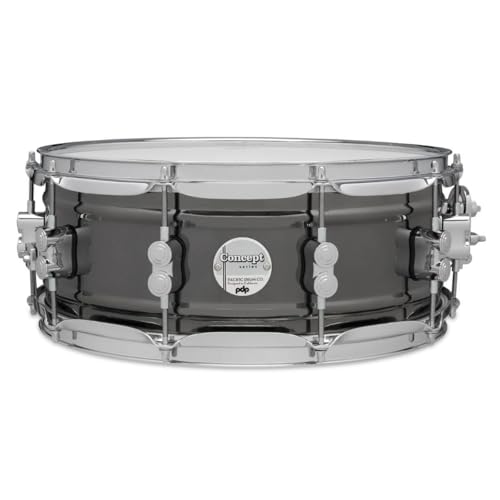
The PDP Concept Series snare in black nickel over steel offers a darker, drier metal voice than a bright chrome drum. The black nickel finish tames some of the harsh overtones steel can produce, giving a focused crack that records cleanly and sits well in a mix. At 5.5 inches deep, it is the classic all-round size, comfortable for beginners and versatile enough for rock, pop, and worship band settings.
PDP is the sister brand of DW, and the Concept Series borrows hardware ideas from its parent line. The throw-off is smooth and reliable, the hoops are sturdy, and the drum arrives with heads that are usable from the first session. Tuning is straightforward, and the drum responds evenly across the head, which helps a beginner learn dynamics without fighting dead spots.
Specs: 14 x 5.5 inch steel shell with black nickel finish; model PDSN5514BNCR; 10 tuning lugs; triple-flanged hoops; throw-off strainer; Remo heads; ASIN B0119PY42O.
Griffin MetalPRO Chrome Steel 14×5.5

The Griffin MetalPRO is the budget pick that still behaves like a real snare. Its chrome steel shell gives a bright, cutting crack that suits rock and practice sessions, and the 14 by 5.5 inch size matches the standard voice beginners learn on. Eight lugs hold the heads in place, and the included drum key means tuning can begin the moment the box opens.
What sets the MetalPRO apart from other low-cost snares is that it arrives as a complete, playable drum rather than a project. The throw-off strainer works, the white coated head is fitted, and the shell is straight enough to tune without dead spots. For a school band student, a first-kit owner, or a player who needs a spare snare for rehearsal, it covers the essentials at a fraction of the cost of the name-brand picks above.
Expectations should stay realistic. The hardware is lighter than the Yamaha or PDP, and the drum benefits from a head upgrade sooner than the others. But as a first snare or a practice-room spare, it delivers the sound and feel a beginner needs to learn on, and it leaves budget for sticks, a stand, and a practice pad.
Specs: 14 x 5.5 inch chrome steel shell; model SM-BC-Metal-14; 8 tuning lugs; throw-off strainer; white coated head; drum key included; ASIN B08JNS69DG.
Griffin Popcorn Soprano 10×6 Oakwood

The Griffin Popcorn Soprano is the wildcard of this guide: a small 10 by 6 inch snare with a high, cracking voice that works as a second snare or a practice drum. Its poplar shell wears an oakwood wrap, and the smaller diameter raises the pitch well above a standard 14 inch drum. That makes it useful for accents, fills, and the sharp backbeat that cuts through a dense mix.
For practice, the size is a feature rather than a limitation. The drum fits on a small stand or a tabletop, travels easily in a gig bag, and responds to light sticks, which encourages the relaxed grip teachers recommend. The 12-strand snare wire gives a crisp response, and the six lugs keep tuning simple.
The Popcorn is not a replacement for a standard snare. Its small head limits low-end body, and it cannot produce the deep backbeat a 14 inch drum delivers. Buy it as a second voice, a travel practice drum, or a fun accent piece, and pair it with one of the full-size picks above for a complete setup.
Specs: 10 x 6 inch poplar shell with oakwood PVC wrap; model SM-10 Oakwood; 12-strand snare wire; 6 tuning lugs; throw-off strainer; drum key included; ASIN B005TY7D48.
How to choose a snare drum for beginners and practice
Size comes first. A 14 inch diameter is the standard, and a 5.5 inch depth is the most versatile size. Deeper drums sound fatter and louder, while shallower drums sound tighter and higher. Beginners should begin with the standard size and explore deeper or smaller drums only after learning the basics.
Shell material shapes the voice. Wood shells, especially birch and maple, sound warm and round with a musical decay. Steel shells sound bright and cutting with a sharp attack, while brass sits between the two with a darker ring. There is no best material, only the voice that fits the music you play and the room you practice in.
Check the hardware before anything else. A smooth throw-off, sturdy hoops, and evenly spaced lugs matter more than the finish, because they decide whether the drum tunes easily and holds its pitch. A drum with rough hardware frustrates a beginner and discourages practice, while a well-built drum rewards every tuning lesson.
Finally, budget for the extras. A snare needs a stand, a pair of sticks, and a drum key, and most beginners benefit from a practice pad for quiet sessions. A cheaper drum with the right accessories serves a learner better than an expensive drum played on a tabletop.
Who should skip these snare drums
Skip this guide if you play in a loud metal or hard rock band and need a drum built for heavy hitting night after night, since a deeper brass or thick-shelled drum may suit that abuse better. The picks here are built for learning and moderate gigging, not for constant high-volume punishment.
Skip it as well if you already own a good snare and want a different voice for recording, since a single-purpose drum such as a piccolo or a hammered brass model may fit that goal better. The picks here are generalists, and a specialist drum serves a specialist need.
Players with a marching background should also look elsewhere, because marching snares use deeper shells, different carriers, and higher tension than the kit snares in this guide. A concert or pipe band snare is a different instrument for a different setting.
Frequently asked questions
What size snare drum should a beginner buy?
A 14 inch diameter with a 5.5 inch depth is the standard size to begin with, because it suits the widest range of music and feels familiar to teachers. Deeper drums sound fatter, shallower drums sound tighter, but the standard size teaches the fundamentals without compromise.
Do I need a snare stand, or can I put the drum on a table?
A snare stand is worth buying, because it holds the drum at the right height and angle and absorbs vibration. A table works for a single practice session, but it slides, rattles, and teaches poor posture. A basic stand costs little and lasts for years.
How often should I replace snare heads?
A practice head lasts several months of regular playing, and a coated batter head shows wear as a smooth, shiny spot in the center.
Can one snare drum work for both practice and gigs?
Yes, and the Mapex MPX Steel and PDP Concept picks in this guide are built for exactly that. Practice at home with lighter sticks or a pad on the head, then remove the pad and play the same drum at the gig. A single versatile drum is the smartest first purchase.
Final verdict
The Mapex MPX Steel 6.5×14 is the best first snare for most beginners, because its deep steel shell covers practice and small gigs with a clear, cutting voice that tunes easily. The Yamaha Stage Custom Birch is the warmer alternative for players who prefer wood, and the PDP Concept Black Nickel Over Steel offers a darker metal voice for recording.
Add the Griffin MetalPRO when the budget is tight or a spare is needed, and add the Griffin Popcorn Soprano when a second, higher voice would expand your kit. Before ordering, confirm the exact model and size, and re-check availability at publish time, since the Yamaha is noted as discontinued and seller stock changes often.
More from Amazon
Programs that pair well with the guide above. Offers and eligibility are set by Amazon and may change.
Free shipping on eligible items, Prime Video and more. Eligible new members can start with a free trial.
Start a Prime free trialAudiobooks and podcasts to listen to on the go. Eligible new members can start with a free trial.
Try Audible freeAd-free music streaming. Eligible new subscribers can start with a free trial.
Try Music Unlimited freeA free business account with business pricing and bulk-buying tools for work, shop or home office.
Create a business accountAs an Amazon Associate we earn from qualifying purchases.



Write Your Review
No reviews yet. Be the first to share your experience!