

Key takeaways
- The best DJ headphones for mixing and cueing, from a flagship Pioneer DJ model to a budget entry pick. Compare isolation, swivel cups, and fit.
- Top Pick: Pioneer DJ HDJ-X10
- Runner-up: Sennheiser HD 25
- Also consider: Audio-Technica ATH-M50x
A DJ headphone has a harder job than a listening headphone. It must stay loud and clear over a club PA, seal out room noise so the next track can be cued in one ear, and survive being folded, twisted, and tossed into a bag night after night.
The five headphones below cover the range a DJ actually needs, from a flagship Pioneer DJ model built for the booth to a budget entry pick that shares its tuning.
As an Amazon Associate, we earn from qualifying purchases.
Quick Answer
For serious booth work, the Pioneer DJ HDJ-X10 leads, with 50 mm drivers and a rugged build. The Audio-Technica ATH-M50x is the best value for home and booth mixing, the Pioneer DJ HDJ-CUE1 is the budget entry pick, the Sennheiser HD 25 suits one-ear cueing, and the Sony MDR-7506 is a proven budget workhorse.
Pioneer DJ HDJ-X10
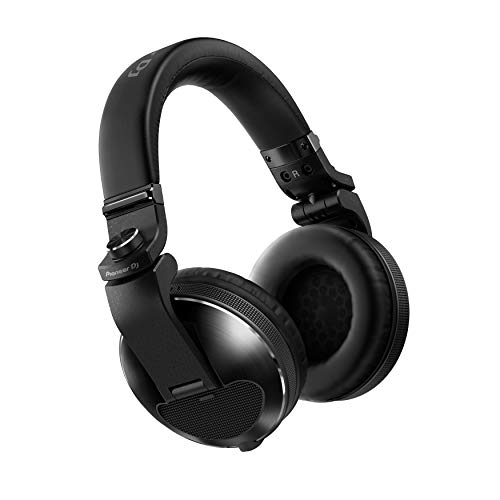
The HDJ-X10 is Pioneer DJ’s flagship DJ headphone, built for the loudest rooms. Its newly developed 50 mm drivers reproduce sound from 5 Hz to 40 kHz, so deep bass stays defined while hi-hats stay sharp. At 32 ohms with 106 dB output it stays loud even when a mixer output is set low, and its 3500 mW maximum input power handles hot cue signals without distortion.
The ear cups swivel for one-ear monitoring, the headband and ear pads resist sweat and grime, and the whole headphone passed the US Military Standard shock rating. Two cables come in the box, a 1.2 m coiled cable that stretches to 3 m and a 1.6 m straight cable, plus a carry case and a 6.3 mm adapter. At 328 g without the cable it is the heaviest pick here, but a wide headband spreads the weight, and the closed-back design seals out room noise.
Specs
| Spec | Detail |
|---|---|
| Model | HDJ-X10-K |
| Driver | 50 mm dome type, closed-back dynamic |
| Frequency range | 5 to 40,000 Hz |
| Impedance | 32 ohms |
| Output sound level | 106 dB |
| Maximum input power | 3500 mW |
| Weight | 328 g without cable |
| Cable | 1.2 m coiled cable, 1.6 m straight cable, detachable |
| In the box | Carry case, 6.3 mm threaded adapter |
Sennheiser HD 25
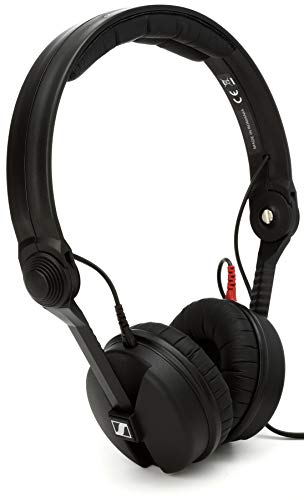
The HD 25 has been a booth standard for decades, and its appeal is simple: it is light, loud, and almost entirely repairable. The split headband and rotatable ear cup make one-ear cueing easy, and the closed-back on-ear design blocks a useful amount of room noise. At about 140 g without the cable it is the lightest pick here, so it stays comfortable through long sets.
Its sound is built for monitoring rather than pleasure listening. The 70 ohm drivers cover 16 to 22,000 Hz with a maximum sound pressure level of 120 dB, and the 200 mW load rating suits the headphone outputs on most mixers and controllers. The detachable cable is only 1.5 m long, which keeps it out of the way in a tight booth, and a screw-on 3.5 to 6.3 mm adapter comes in the box. Every part, from the ear pads to the cable, can be replaced.
The on-ear fit clamps firmly, and the standard box holds a straight cable only, with no coiled option and no carry case.
Specs
| Spec | Detail |
|---|---|
| Model | HD 25, article number 506909 |
| Driver | Dynamic, closed-back, on-ear |
| Frequency range | 16 to 22,000 Hz |
| Impedance | 70 ohms |
| Maximum sound pressure level | 120 dB |
| Load rating | 200 mW |
| Weight | About 140 g without cable |
| Cable | 1.5 m detachable straight cable |
| Warranty | 2 years |
Audio-Technica ATH-M50x

The ATH-M50x is a studio monitor headphone that many DJs use in the booth, and its strengths translate well. The 45 mm drivers deliver detailed sound from 15 to 28,000 Hz, and the 38 ohm impedance works with almost any mixer, controller, or laptop output. The ear cups swivel 90 degrees for one-ear monitoring, the closed-back design gives solid passive isolation, and the folding design packs flat into a bag.
Three detachable cables come in the box: a 1.2 to 3.0 m coiled cable, a 3.0 m straight cable, and a 1.2 m straight cable, plus a protective pouch and a 6.3 mm adapter. The 2-year warranty covers parts and labor, and the listing confirms the model is not discontinued.
The tuning is flat and honest rather than bass-heavy. There is no microphone and no wireless option, and the pleather ear pads can feel warm during long summer sets.
Specs
| Spec | Detail |
|---|---|
| Model | ATH-M50x |
| Driver | 45 mm large-aperture, closed-back dynamic |
| Frequency range | 15 to 28,000 Hz |
| Impedance | 38 ohms |
| Sensitivity | 99 dB |
| Maximum input power | 1600 mW |
| Weight | 285 g |
| Cable | Three detachable cables included |
| Warranty | 2 years |
Sony MDR-7506

The MDR-7506 has been a studio and broadcast staple since 2001, built on a simple formula: clear sound, a folding frame, and a build that survives daily use. The 40 mm neodymium drivers cover 10 Hz to 20 kHz at 63 ohms with 106 dB sensitivity, and the 1000 mW power handling suits loud cue levels. The closed-back design isolates well enough for booth work, and it folds down with a soft case included.
At 8.1 oz it is light for an over-ear model, and the 9.8 ft coiled cord reaches across a mixer without an extension. The gold-plated 3.5 mm plug comes with a 1/4-inch adapter, so it connects to almost any DJ mixer or controller without extra parts.
Two limits matter for DJ use. The cord is not detachable, so a damaged cable means a repair rather than a quick swap, and the ear cups do not swivel for one-ear cueing. DJs who cue in one ear constantly should weigh that against the low cost and proven reliability.
Specs
| Spec | Detail |
|---|---|
| Model | MDR7506 |
| Driver | 40 mm neodymium, closed-back dynamic |
| Frequency range | 10 Hz to 20 kHz |
| Impedance | 63 ohms |
| Sensitivity | 106 dB per mW |
| Power handling | 1000 mW |
| Weight | 8.1 oz |
| Cable | 9.8 ft coiled cord, not detachable |
| In the box | Soft case, 1/4-inch adapter |
Pioneer DJ HDJ-CUE1

The HDJ-CUE1 is the entry point into Pioneer DJ headphones, and it borrows more from the pro models than its position suggests. Its 40 mm drivers use the same specialist sound tuning as the HDJ-X5, with a focus on the low frequencies that matter for precise mixing. The 5 to 30,000 Hz range, 32 ohm impedance, 104 dB sensitivity, and 2000 mW maximum input power cover any mixer output a beginner is likely to meet.
The ear cups swivel for one-ear monitoring, the cable is detachable with a bayonet connector that prevents accidental disconnections, and the 1.2 m short coiled cable stretches to 1.8 m so it stays out of the way on a small controller setup. At 215 g without the cable it is light enough for long practice sessions.
No carry case comes in the box, only the cable and the manual. The on-ear fit isolates less than the over-ear models here, which shows in very loud rooms.
Specs
| Spec | Detail |
|---|---|
| Model | HDJ-CUE1 |
| Driver | 40 mm dome type, closed-back dynamic |
| Frequency range | 5 to 30,000 Hz |
| Impedance | 32 ohms |
| Sensitivity | 104 dB |
| Maximum input power | 2000 mW |
| Weight | 215 g without cable |
| Cable | 1.2 m detachable coiled cable, extends to 1.8 m |
How to choose
Begin with the ear cups. A DJ headphone must swivel so one ear can stay on the room while the other cues the next track. The HDJ-X10, HD 25, ATH-M50x, and HDJ-CUE1 all do this; the MDR-7506 does not, which is its main drawback for booth work.
Next, check isolation and output. Closed-back designs seal out room noise, and a sensitivity near or above 100 dB with low impedance means the headphone stays loud from a controller output. All five picks clear that bar, but the HD 25 at 70 ohms needs a little more output than the 32 ohm Pioneer DJ models.
Then look at the cable. Detachable cables are worth having, because cables fail first in DJ use and a swap beats a repair. Only the MDR-7506 has a fixed cord. Weight matters too: the HD 25 and HDJ-CUE1 are the lightest picks and suit long sets, while the HDJ-X10 trades weight for durability.
Who should skip
DJs who want wireless headphones should skip this whole list. Every pick here is wired, because Bluetooth adds latency that makes beatmatching unreliable, and none of these models has active noise canceling or a microphone. Travelers who want one headphone for flights and the booth should look at a wireless model with a wired mode.
Listeners who want a bass-heavy consumer sound should also look elsewhere. The ATH-M50x and MDR-7506 are tuned flat for monitoring, and even the Pioneer DJ models are tuned for cueing accuracy rather than a boosted low end. On-ear models like the HD 25 and HDJ-CUE1 clamp firmly, so an over-ear model may fit sensitive ears better.
Frequently Asked Questions
Do DJ headphones need swiveling ear cups?
Yes, for most DJ work. A swiveling cup lets one ear stay on the room mix while the other ear cues the next track, which is how beatmatching works in a loud booth. Four of the five picks here swivel; the Sony MDR-7506 does not.
Can I use studio headphones like the ATH-M50x or MDR-7506 for DJing?
Yes. Both are closed-back, isolate well, and are loud enough for booth use. The ATH-M50x adds swiveling cups and detachable cables, which suit DJ work better. The MDR-7506 lacks both, so it suits DJs who cue with both ears on.
What impedance should I pick for DJ headphones?
Low impedance, around 32 ohms, is the safest choice, because it plays loud from almost any mixer or controller output. The HD 25 at 70 ohms still works from most DJ mixers, but it needs a little more output. Impedance above 100 ohms suits studio interfaces better than DJ mixers and is best avoided for booth use.
Why do some DJ headphones cost more than others?
The jump from budget to premium buys larger drivers, a wider frequency range, tougher materials, and replaceable parts. The HDJ-X10 costs more than the HDJ-CUE1 because it has 50 mm drivers, a 5 Hz to 40 kHz range, a shock-rated build, and a carry case in the box. The HDJ-CUE1 keeps the same tuning family at a lower cost with smaller drivers and fewer extras.
Final verdict
The Pioneer DJ HDJ-X10 is the best DJ headphone here for anyone who plays out regularly, with the widest range, the toughest build, and the loudest output. The Sennheiser HD 25 is the classic one-ear cueing pick and the lightest in the group, while the Audio-Technica ATH-M50x is the best value for DJs who mix at home and in the booth. The Sony MDR-7506 remains a reliable budget workhorse for DJs who cue with both ears on, and the Pioneer DJ HDJ-CUE1 is the smartest entry pick, with pro tuning at the lowest cost here. Confirm the exact model and listing before ordering, since color variants and bundles carry their own listings.
More from Amazon
Programs that pair well with the guide above. Offers and eligibility are set by Amazon and may change.
Free shipping on eligible items, Prime Video and more. Eligible new members can start with a free trial.
Start a Prime free trialAudiobooks and podcasts to listen to on the go. Eligible new members can start with a free trial.
Try Audible freeAd-free music streaming. Eligible new subscribers can start with a free trial.
Try Music Unlimited freeA free business account with business pricing and bulk-buying tools for work, shop or home office.
Create a business accountAs an Amazon Associate we earn from qualifying purchases.



Write Your Review
No reviews yet. Be the first to share your experience!