

Key takeaways
- Looking for the best harmonicas for beginners? We compare five diatonic harmonicas in C, from budget starter sets to classic blues harps for new players.
- Top Pick: Hohner Special 20 Harmonica, Key of C
- Runner-up: Lee Oskar Major Diatonic Harmonica, Key of C
- Also consider: Fender Blues Deluxe Harmonica, Key of C
A harmonica is one of the easiest instruments to start on, and one of the hardest to put down. It fits in a pocket, needs no tuning before every session, and a single diatonic harmonica in the key of C can carry a beginner through folk melodies, campfire songs, and the first steps of blues playing. The catch is that the cheapest harmonicas often leak air and play out of tune, which is why so many beginners quit before the fun starts.
This guide compares five diatonic harmonicas that suit a first-time player. Every pick is a 10-hole diatonic model, and four of the five are tuned to the key of C, the standard starting key for lessons, songbooks, and online tutorials. The fifth is a seven-key starter set for players who want to explore more keys from day one.
As an Amazon Associate, we earn from qualifying purchases.
Quick Answer
The Hohner Special 20 in C is the safest first harmonica: an airtight plastic comb and brass reeds that make single notes easier to find. The Lee Oskar suits players heading toward blues, and the Fender Blues Deluxe is the pick for the smallest spend. The JDR seven-piece set covers every key at once, while the Marine Band 1896 is the classic wooden-comb option for a blues sound.
Hohner Special 20 Harmonica, Key of C

The Hohner Special 20 is the most recommended beginner harmonica in the world, and the recommendation holds up. Its injection-molded plastic comb seals tightly against the reed plates, so very little air escapes around the notes, and that airtight build is what makes single notes easier to isolate when a new player is still learning to shape the mouth. The mouthpiece projects slightly forward, which feels comfortable against the lips and helps the harmonica slide smoothly across the mouth.
The reeds are brass, 20 of them across 10 holes, tuned to standard Richter tuning in the key of C. That tuning is the default for beginner lessons, and it means the harmonica plays a full C major scale on the blow notes of holes 1 through 4 and the draw notes that fill in between. Bending notes, the technique that gives blues playing its cry, is possible on the draw holes, and the Special 20 bends more easily than most harmonicas near its level.
Specs
| Specification | Detail |
|---|---|
| Brand | Hohner |
| Model | 560PBX-C |
| Key | C major |
| Type | 10-hole diatonic |
| Reeds | 20, brass |
| Comb | Plastic, injection molded |
| Tuning | Richter |
| Length | 10.2 cm |
Lee Oskar Major Diatonic Harmonica, Key of C

The Lee Oskar Major Diatonic is the harmonica for beginners who already know they want to play blues. Its plastic comb is airtight like the Special 20, but the reed plates are mounted in a way that makes the harmonica easier to bend, and bending is the heart of blues playing. The tone is bright and punchy, with a quick response that suits rhythmic chugging and single-note riffs alike.
One practical advantage is the modular design. The comb, reed plates, and cover plates come apart with a few screws, so a player can swap in replacement reed plates for the same key instead of buying a whole new harmonica when a reed wears out. The key is marked in bright white on both ends, along with the second-position key, so a player can see at a glance that a C harmonica plays blues in G. The harmonica is tuned slightly sharp, to 441 hertz or higher, which gives it a bright edge that cuts through guitars and other instruments.
Specs
| Specification | Detail |
|---|---|
| Brand | Lee Oskar |
| Model | 1910-C |
| Key | C major |
| Type | 10-hole diatonic |
| Reeds | 20, brass |
| Comb | Plastic |
| Tuning | Major diatonic, 441 hertz or higher |
| Dimensions | 6 x 3 x 1 inches |
Hohner Marine Band 1896 Harmonica, Key of C
The Hohner Marine Band 1896 is the oldest harmonica design still in regular production, and it is the sound most people hear in their heads when they think of a blues harmonica. Its comb is made of pearwood, which gives the tone a warm, woody character that plastic combs do not quite match, and the arched stainless steel covers with side vents project the sound forward. The model number is 1896/20-C.
The wooden comb is also the reason this harmonica asks more of its owner. Wood swells slightly when it absorbs moisture from playing, and a beginner who plays long sessions without letting the harmonica dry may find the comb tightens or the edges feel rough against the lips. Regular players learn to tap the harmonica dry after playing and to store it in its case, and the instrument rewards that care with a tone that has defined blues and folk music for more than a century.
Specs
| Specification | Detail |
|---|---|
| Brand | Hohner |
| Model | 1896/20-C |
| Key | C major |
| Type | 10-hole diatonic |
| Reeds | 20, brass |
| Comb | Pearwood |
| Covers | Stainless steel, arched |
| Dimensions | 4.5 x 1.5 x 1.25 inches |
Fender Blues Deluxe Harmonica, Key of C
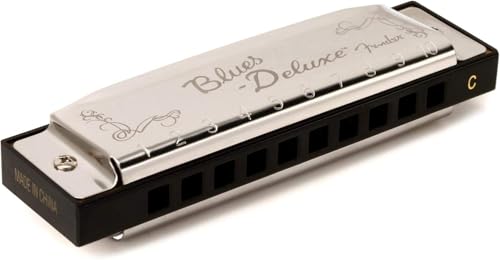
The Fender Blues Deluxe is the budget pick in this guide, and it is the harmonica to buy when the budget is tight but a toy harmonica is not an option. It is a 10-hole diatonic harmonica in the key of C with chromed metal covers and a molded PVC comb that resists moisture, so it does not swell or warp the way a wooden comb can. Brass reeds sit behind the covers, and the holes are wide enough that a new player can find single notes without too much frustration.
The harmonica ships with a case and a one-year limited manufacturer warranty, which is more support than most harmonicas near its level offer. Its tone is bright and straightforward rather than deep or complex, and it will not bend as easily as the Hohner Special 20 or the Lee Oskar. For a first harmonica, though, it plays in tune, holds up to daily practice, and costs little enough that upgrading later does not feel wasteful.
Specs
| Specification | Detail |
|---|---|
| Brand | Fender |
| Model | 990701001 |
| Key | C major |
| Type | 10-hole diatonic |
| Reeds | Brass |
| Comb | Molded PVC |
| Covers | Chromed metal |
| Weight | 132 g |
JDR Harmonica Set of 7

The JDR Harmonica Set of 7 is the only multi-key pick in this guide, and it suits a beginner who wants to play along with songs in more than one key. The set holds seven 10-hole diatonic harmonicas in the keys of C, D, E, F, G, A, and Bb, so a player can match the key of a song instead of transposing it. Each harmonica has 20 tones across 10 holes, and the set arrives in an EVA protective case that keeps the harmonicas organized and safe between sessions.
The trade-off for seven harmonicas at a budget level is consistency. The individual harmonicas are not as airtight or as easy to bend as the Hohner Special 20 or the Lee Oskar, and a player who practices bending will outgrow them sooner. For learning melodies and playing along with recordings in different keys, the set is hard to beat.
Specs
| Specification | Detail |
|---|---|
| Brand | JDR |
| Model | N7 |
| Keys | C, D, E, F, G, A, Bb |
| Type | 10-hole diatonic, 7 pieces |
| Reeds | 20 per harmonica |
| Case | EVA protective case |
| Unit count | 7 harmonicas |
How to choose
Start with the key. A diatonic harmonica plays in one key, and the key of C is the standard starting point because most beginner lessons, songbooks, and tutorials are written for it. A C harmonica also plays blues in G when used in second position, which covers a large share of blues and folk songs. Only buy a different key first if a teacher or a specific songbook asks for it.
Next, look at the comb. A plastic comb is the easiest choice for a beginner because it does not swell, crack, or need special care, and it seals tightly so less air leaks past the reeds. A wooden comb sounds warmer but needs drying after playing and can feel rough as it absorbs moisture. Metal combs exist too, but they are rare in beginner harmonicas and usually cost more.
Then think about bending. Bending notes is the technique that turns a diatonic harmonica into a blues instrument, and some harmonicas bend far more easily than others. The Hohner Special 20 and the Lee Oskar Major Diatonic are known for easy bending, while budget harmonicas often resist it. If blues is the goal, bending matters from the first month. If folk melodies and campfire songs are the goal, it matters less.
Who should skip
Players who want to play classical music or jazz standards in many keys should skip a diatonic harmonica and look at a chromatic harmonica instead. A diatonic harmonica is built around one key, and while skilled players can bend and overblow their way into other keys, that is advanced technique, not a beginner path. A chromatic harmonica has a button that opens every semitone and suits music that changes key often.
Anyone who needs a silent practice instrument should also pause. A harmonica is a wind instrument, and it is audible to everyone in the room. There are practice mutes and quiet practice techniques, but none of them makes a harmonica silent, and a household that needs quiet will not be happy with hours of beginner practice.
Frequently Asked Questions
What key harmonica should a beginner buy first?
Buy a diatonic harmonica in the key of C. Most beginner lessons, songbooks, and online tutorials are written for a C harmonica, and it plays the C major scale cleanly in first position. A C harmonica also plays blues in G in second position, which is the most common blues key for guitar players. Once the basics are comfortable, add a harmonica in A or D for blues in E or A.
Is a cheap harmonica good enough to learn on?
A cheap harmonica from a known instrument maker is good enough, but a toy harmonica is not. A real beginner harmonica holds its tuning and lets a player isolate single notes, while a toy leaks air and plays out of tune.
How long does it take to learn the harmonica?
Most beginners can play a simple melody within a few weeks of short daily practice, and single notes usually arrive within the first month. Bending notes takes longer, often several months, and clean bends are the skill that separates a casual player from a blues player. Short daily sessions beat long weekly sessions, because the mouth muscles that shape notes need regular practice to develop.
Final verdict
For most beginners, the Hohner Special 20 in C is the right first harmonica. It is airtight, comfortable, easy to bend, and good enough to keep playing for years after the basics are learned. The Lee Oskar Major Diatonic is the pick for players who know blues is the goal, and the Fender Blues Deluxe is the pick for the smallest spend. The JDR seven-piece set covers every common key at once, and the Hohner Marine Band 1896 is the classic choice for a beginner who wants a traditional wooden-comb blues sound and is willing to care for it. Whichever harmonica fits the goal, start in the key of C and practice a little every day.
More from Amazon
Programs that pair well with the guide above. Offers and eligibility are set by Amazon and may change.
Free shipping on eligible items, Prime Video and more. Eligible new members can start with a free trial.
Start a Prime free trialAudiobooks and podcasts to listen to on the go. Eligible new members can start with a free trial.
Try Audible freeAd-free music streaming. Eligible new subscribers can start with a free trial.
Try Music Unlimited freeA free business account with business pricing and bulk-buying tools for work, shop or home office.
Create a business accountAs an Amazon Associate we earn from qualifying purchases.



Write Your Review
No reviews yet. Be the first to share your experience!