

Key takeaways
- Build good habits with the best kids chore charts, from magnetic routine boards to reward systems made for mornings, homework and tidy rooms.
A chore chart turns vague reminders into a visible routine kids can follow on their own. Instead of repeating the same requests every morning, parents point to the board, kids move a token, and the day moves forward. The best charts keep tasks simple, rewards visible, and the whole system easy to reset each week. Magnetic boards work well on a fridge, dry-erase surfaces let families write custom jobs, and chunky magnets suit small hands that are still learning to grip.

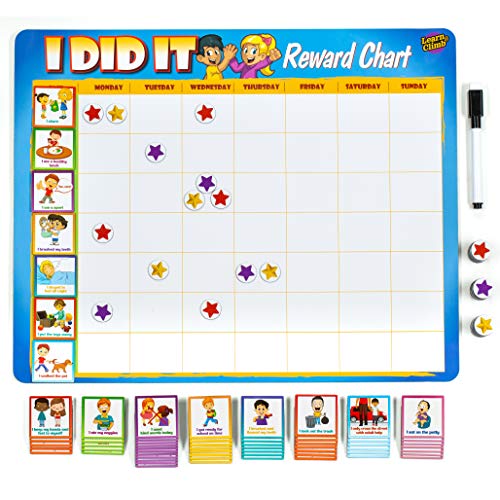
This guide compares five magnetic chore charts built for children from age three upward. Each one uses a weekly layout, a set of task magnets, and a reward system that children can see and touch. We looked at board size, magnet count, age range, and how each chart handles more than one child. Pick the board that matches your child’s age, your fridge space, and how much structure your mornings need.
Quick Picks
As an Amazon Associate we earn from qualifying purchases
| Product | Best for | Key spec |
|---|---|---|
| inamio Magnetic Kids Responsibility Reward Chart | Multiple kids ages 3 to 9 | Raised reward tokens and chore tasks |
| Learn & Climb Kids Responsibility Chart | A wide chore menu | 63 chores on one magnetic board |
| Leesgel Magnetic Reward Chart | Custom weekly jobs | Dry-erase board with 52 reward stickers |
| FantasyKids Magnetic Reward Chart | Younger children ages 3 and up | 50 chore magnets and 77 reward tokens |
| Battat Education Responsibility Chart | A themed weekly routine | Space theme with 92 pieces and 6 goals |
How to Choose
Match the board to your child’s age
A chart aimed at toddlers needs big magnets, few tasks, and pictures a child who cannot read yet can still follow. Boards built for ages three to nine work best with simple icons, bright colors, and a short list of daily jobs. Older children handle longer task lists and written goals, so a board with blank spaces for custom jobs grows with them. Check the age range on the listing before you buy, and keep small magnets away from children under three, since several boards in this guide carry a choking-hazard warning for small parts.
Count the magnets before you commit
The magnet count decides how many jobs and rewards one board can track at once. A kit with fifty chore magnets and seventy-plus reward tokens covers a full week for one child, while a board with fewer pieces may need nightly resets. Look for separate magnets for chores, rewards, and custom tasks, plus a marker for writing names and goals. Storage matters too: a bag or a spare board keeps loose pieces from vanishing into drawers. If two children share one chart, confirm the kit includes enough rows or name cards for each child.
Pick a surface that fits your space
Most magnetic charts hang on a fridge, so measure the door before you order. A board around fourteen inches wide fits a standard fridge door, while a larger board needs a wall hook or a dedicated spot in the kitchen. Dry-erase surfaces let you write custom chores and wipe them clean each week, but they need a marker that stays with the board. Cardboard-backed boards are lighter and easier to move, while alloy steel boards hold magnets more firmly. A hanging cord adds a second option when fridge space runs short.
Keep rewards simple and visible
A reward system works when a child can see progress without asking. Tokens that move across the board give instant feedback, and a weekly goal gives the effort a finish line. Avoid systems that need constant adult input, since the chart should run itself once the routine is set. Small treats, extra story time, or a chosen family activity make better rewards than points that never turn into anything. Reset the board together each Sunday so the new week feels like a fresh chance rather than a leftover list of missed jobs.
The 5 Best Options
inamio Magnetic Kids Responsibility Reward Chart
The inamio board suits families with more than one young child sharing a single chart. Raised reward tokens make progress easy to spot from across the kitchen, and the chore tasks cover everyday jobs like getting dressed, brushing teeth, and helping around the house. The board is built for children from three to nine, and the magnetic pieces stay put on a fridge door. Parents can track chores and behavior goals side by side, which keeps the system simple enough for a preschooler to follow without constant help.
Specs
- Model number: INA-SP60
- Age range: 3 to 9 years
- Magnetic reward chart for home and school use
- Raised reward tokens with chore tasks
- Choking hazard warning: small parts, not for children under 3 years
Best for: Families with several children ages 3 to 9 who want one shared board.
Watch out for: Small parts mean this board is not suited to children under three, and loose tokens need a storage spot.
Learn & Climb Kids Responsibility Chart
The Learn & Climb board packs sixty-three chores onto one magnetic surface, which makes it a strong pick for families who want plenty of task choices. Potty-training tasks sit alongside everyday jobs, so the same board covers a child who is learning several routines at once. The magnetic board works for more than one child, and the chart suits a household that rotates chores each week. Because the listing is tracked through a third-party tracker, confirm the board is still available before ordering, and check that the chore list matches the jobs your household actually needs.
Specs
- Model: Reward-1468
- 63 chores, including potty-training tasks
- Magnetic board for multiple kids
- UPC: 806810314685
- Third-party tracker shows a current listing as of March 2026
Best for: Families who want a wide chore menu on one board.
Watch out for: Tracker data is months old, so confirm availability before ordering.
Leesgel Magnetic Reward Chart

The Leesgel chart is a dry-erase board built for custom weekly jobs. One name sticker lets you label the board for a single child, and fifty-two magnetic reward stickers give you a full week of tokens without reusing pieces. The alloy steel surface holds magnets firmly and wipes clean, so parents can write new chores each Sunday and erase them when the week ends. The board mounts with magnets, which makes it easy to move between the fridge and a wall hook. Keep the small magnets away from toddlers, since the listing carries a clear warning about swallowed magnets.
Specs
- Manufacturer part number: LGX091
- Material: alloy steel
- 52 magnetic reward stickers and 1 name sticker
- Dry-erase whiteboard with magnetic mount
- Includes marker, magnet, and sticker
- Warning: small magnets can be harmful if swallowed
Best for: Parents who want a custom dry-erase chart for one child.
Watch out for: Small magnets are a hazard for toddlers; store the board out of reach of very young children.
FantasyKids Magnetic Reward Chart

The FantasyKids chart gives a younger child a big, friendly board with plenty of pieces to move. Fifty chore magnets and seventy-seven reward tokens cover a full week, and the dry-erase surface lets parents add custom jobs that the printed magnets do not cover. The board measures fourteen and a half by eleven and a half inches, which fits a fridge door without crowding it, and a hanging cord offers a second way to display it. Rounded edges and a sturdy board add a layer of safety for small hands, and the kit includes a storage bag for loose pieces.
Specs
- Manufacturer part number: chart-10
- 50 chore magnets and 77 reward tokens
- Board size: 14.5 x 11.5 x 0.5 inches
- Material: cardboard and plastic
- Ages 3 and up
- Dry-erase board with storage bag and hanging cord
- First available April 7, 2025
Best for: Younger children ages 3 and up who need a large, simple board.
Watch out for: The listing dates from April 2025, so confirm it is still in stock before ordering.
Battat Education Responsibility Chart

The Battat chart turns chores into a space journey, which suits a child who loves a theme. Six weekly goals cover personal, communal, and social skills, and three magnet types mark a completed task, a partial effort, or a missed day. The board hangs on a wall and includes a dry-erase marker for custom goals, so families can add jobs the printed set does not cover. Ninety-two pieces give the chart plenty of variety, and the space theme keeps younger children engaged through the week. The board suits ages three and up.
Specs
- Item model number: BE3731Z
- 92 pieces
- Ages 3 years and up
- Board size: 15.75 x 0.98 x 11.81 inches
- Space theme with 6 weekly goals
- Full, half, and alien magnets for tracking progress
- Dry-erase marker included
- Release date: May 18, 2023
Best for: Children ages 3 and up who respond to a themed chart.
Watch out for: The board weighs over three pounds, so wall mounting needs a solid hook, and it is heavier than the magnetic fridge charts here.
Which One Fits Your Situation
Several children sharing one board
When two or three children share a chart, pick a board with separate rows or name cards for each child. The inamio board is built for multiple kids, and the Learn & Climb board covers several children on one surface. Give each child a different token color if the kit allows it, and set one shared weekly goal alongside individual jobs so siblings cheer each other on.
A preschooler learning first routines
A child of three or four needs big magnets, a short task list, and a board at eye level. The FantasyKids chart suits this age with large pieces and a simple layout, while the Battat chart adds a space theme that holds a young child’s attention. Keep the job list to three or four tasks, and let the child move the token the moment a job is done.
A child who needs custom jobs each week
When chores change with the season or the school term, a dry-erase board beats a fixed printed list. The Leesgel chart lets you write fresh jobs each week and wipe them away, while the FantasyKids board pairs printed magnets with a dry-erase surface for extras. Write the week’s jobs together on Sunday so your child owns the list from the first day.
A busy household that wants a set-and-forget system
If mornings are rushed, pick a board with a large chore menu and enough tokens for the whole week. The Learn & Climb chart holds sixty-three chores, so you rarely run out of jobs to assign. Set the board on the fridge where everyone passes it, agree on one reward for a full week, and reset it together each Sunday night so Monday begins clean.
Common Mistakes
- Loading the board with too many jobs in the first week, which leaves a child discouraged by Wednesday.
- Picking a chart with small magnets for a toddler, despite the choking-hazard warning on the listing.
- Hiding the board inside a cupboard, where nobody sees it and the routine fades.
- Changing the reward rules midweek, which teaches children that finishing a job does not always earn the promised token.
- Forgetting to reset the board each week, so old tokens pile up and the new week begins with a stale list.
Frequently Asked Questions
What age should a child be before using a chore chart?
Most magnetic chore charts suit children from age three upward, when a child can grasp a magnet and follow a picture or a simple word. The boards in this guide list ages three to nine, and the FantasyKids and Battat charts both name three as the minimum age. Children under three should not handle small magnets, so wait until your child is old enough to use the pieces safely.
How many chores should go on a chart each week?
Five or six jobs is a good number for most children. A short list keeps the board readable and lets a child finish every job without feeling overwhelmed. Younger children do best with three or four tasks, while older children can handle six or seven. Add one new job at a time as your child masters the current set, rather than loading the board all at once.
Do magnetic chore charts work on any fridge?
A magnetic chart needs a steel fridge door or another magnetic surface, and most standard fridges qualify. Stainless steel doors vary, so hold a fridge magnet against the door before ordering if you are unsure. If the door is not magnetic, hang the board on a wall hook instead, or pick a chart with a hanging cord like the FantasyKids board.
What makes a good reward for finishing chores?
The best rewards are simple, immediate, and tied to the effort. Extra story time, a chosen family activity, or a small treat on Friday beats points that sit unused for months. Let your child help pick the reward so the goal feels like theirs, and keep the prize small enough to offer every week without turning the chart into a negotiation.
More from Amazon
Programs that pair well with the guide above. Offers and eligibility are set by Amazon and may change.
Free shipping on eligible items, Prime Video and more. Eligible new members can start with a free trial.
Start a Prime free trialAudiobooks and podcasts to listen to on the go. Eligible new members can start with a free trial.
Try Audible freeAd-free music streaming. Eligible new subscribers can start with a free trial.
Try Music Unlimited freeA free business account with business pricing and bulk-buying tools for work, shop or home office.
Create a business accountAs an Amazon Associate we earn from qualifying purchases.



Write Your Review
No reviews yet. Be the first to share your experience!