

Key takeaways
- Compare the best acoustic panels for home recording studios, from mineral wool and fiberglass panels to thick foam wedges, and pick the right treatment.
A bare room fights every recording you make in it. Sound bounces off flat walls, doubles back on itself, and smears vocals and instruments with echo and flutter. Acoustic panels absorb the reflections that muddy a mix, so a vocal track sounds dry and present and a guitar take keeps its detail.
This guide covers studio acoustic treatment panels only: foam wedges and pyramids, fabric-wrapped mineral wool panels, and fiberglass panels built for recording rooms. Every pick below is a wall panel, not a bass trap, diffuser, or room kit. We compare thickness, material, coverage, and mounting, so you can match the panel to your room and your budget.
As an Amazon Associate, we earn from qualifying purchases.
Quick Answer
The ATS Acoustics 24 by 48 inch mineral wool panel is the strongest all-round pick, with a published absorption rating of 1.0 and a rigid frame that hangs like a picture. The Auralex Studiofoam wedges are the classic foam choice for spot treatment. UMIACOUSTICS fiberglass panels suit vocal booths, TroyStudio three-inch foam covers a small room cheaply, and AUSLET pyramid foam is the budget bulk buy.
ATS Acoustics Sound Absorbing Panel, 24 x 48 x 2 Inches, Beveled Edge, Ivory
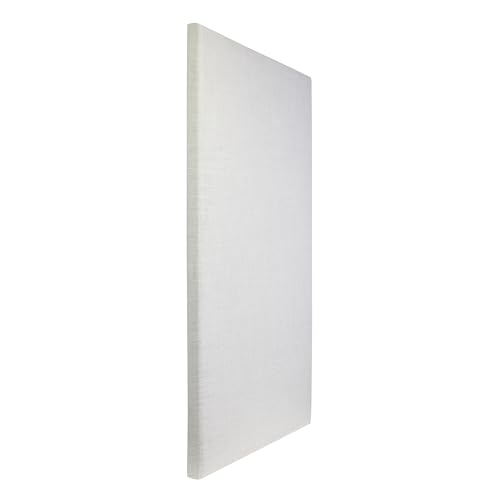
The ATS Acoustics panel is the reference point this roundup is measured against. It is a single large panel, 24 inches wide and 48 inches tall, built around a mineral wool core inside a solid wood frame with a fabric face. The maker rates it at an NRC of 1.0. It absorbs strongly across the midrange and upper frequencies.
One panel covers eight square feet, so four panels cover a good stretch of wall. The beveled edge gives a finished look where panels meet, and the rigid frame hangs flat. Mounting clips come in the box, and the panel weighs about 12 pounds, so use a solid wall anchor. The trade-off is cost: treating a whole room takes several units, and the total adds up faster than foam packs. Each color is its own listing, so confirm the ivory version at checkout.
Specs
| Feature | Detail |
|---|---|
| Material | Mineral wool core, solid wood frame, jute fabric face |
| Size | 24 x 48 x 2 inches |
| Noise reduction coefficient | 1.0 |
| Edge | Beveled |
| Weight | About 12 lb |
| Mounting | Clips included |
| Fire rating | Not stated in the sources seen |
| Panels per pack | 1 |
Auralex Studiofoam Wedges, 2 x 24 x 24 Inches, 12-Pack, Charcoal

Auralex Studiofoam is the long-running foam standard. This 12-pack of two-inch wedge panels has been the default home-studio choice for years: the ridges break up flat reflections while the open-cell foam absorbs mid and high frequencies. The maker rates the two-inch wedge at an NRC of 0.80, and the panels meet the UL 94 HF-1 flammability standard.
Twelve panels at two feet square each cover 48 square feet, enough to treat the wall behind a desk, the side walls at the first reflection points, and a section of ceiling in a small room. The panels cut cleanly with a sharp blade. Adhesive is not included, so budget for spray adhesive or mounting tabs, and plan the layout before sticking anything down, because repositioning foam tears it. Two inches of foam does not control low bass, so a boomy room still needs corner traps. The stock signal for this listing is stale, with the most recent tracking record about a year old, so confirm the listing is in stock at checkout.
Specs
| Feature | Detail |
|---|---|
| Material | Open-cell polyurethane Studiofoam |
| Size | 24 x 24 x 2 inches per panel |
| Profile | Wedge |
| Noise reduction coefficient | 0.80 |
| Flammability | UL 94 HF-1 |
| Coverage | 48 sq ft |
| Panels per pack | 12 |
| Adhesive | Not included |
UMIACOUSTICS Fiberglass Acoustic Panels, 4-Pack, Charcoal Grey

UMIACOUSTICS takes a different approach from foam: four rigid fiberglass panels with a fabric face and a hanging bracket system. The two-inch fiberglass core gives strong, even absorption, and the roundup data for this line puts its NRC at 1.0, matching the ATS panel. Fiberglass holds its shape for years, so these panels suit a vocal booth or a mixing position.
The bracket system is the best mounting in this guide. Each panel hangs from a removable metal bracket, so it sits flat on the wall and comes down cleanly if the room layout changes. The four-panel kit covers about 16 square feet, enough for a vocal booth wall or the wall behind a desk. Two things need checking before ordering. The listing describes both a hanging bracket system and a self-adhesive backing in different places, so confirm which mounting style the listing you buy actually includes. The exact panel dimensions are not spelled out in the sources seen, so measure your wall against the coverage figure before ordering.
Specs
| Feature | Detail |
|---|---|
| Material | Fiberglass core, polyester fabric face |
| Thickness | 2 inches |
| Noise reduction coefficient | 1.0 |
| Coverage | About 16 sq ft per kit |
| Mounting | Hanging bracket system |
| Environmental rating | E0 |
| Panels per pack | 4 |
| Color | Charcoal grey |
TroyStudio Thick Acoustic Foam Panels, 12 x 12 x 3 Inches, 12-Pack, Black
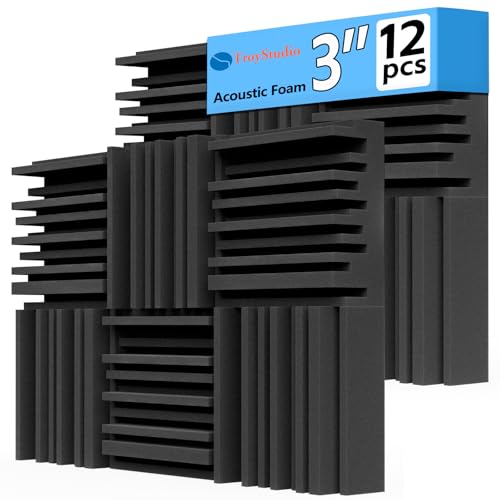
TroyStudio is the thick-foam option for buyers who want real depth without a fabric-panel budget. Each panel is three inches thick, a full inch deeper than the standard two-inch foam in this guide, and that extra depth extends useful absorption lower into the frequency range. The groove pattern gives the wall a sculpted look, and the foam is high-density polyurethane.
Twelve panels cover 12 square feet, a smaller area than the bulk packs, but the three-inch profile means each square foot works harder. That makes this pack a good fit for a vocal booth, a podcast corner, or the wall directly behind a microphone. The panels mount with tape or spray adhesive and trim easily around outlets. The trade-off is coverage per dollar: a full room needs more than one pack, and at that point the bulk two-inch packs start to look cheaper. Adhesive is sold separately, so add mounting supplies to the order.
Specs
| Feature | Detail |
|---|---|
| Material | High-density polyurethane foam |
| Size | 12 x 12 x 3 inches per panel |
| Profile | Groove |
| Coverage | 12 sq ft |
| Flame retardant | Yes |
| Panels per pack | 12 |
| Adhesive | Sold separately |
| Noise reduction coefficient | Not stated in the sources seen |
AUSLET Pyramid Acoustic Foam Panels, 12 x 12 x 2 Inches, 36-Pack, Black

AUSLET is the budget bulk buy in this guide: 36 pyramid-profile foam panels for roughly the cost of a single fabric-wrapped panel. Each tile is 12 inches square and two inches thick, and the pyramid points scatter reflections while the foam absorbs mid and high frequencies. The full pack covers 36 square feet, enough to treat a whole small room in one order, which is the main reason to choose it.
The pyramid shape is the practical difference from wedge foam. The points give the wall a three-dimensional look that reads well on camera, so they suit streamers and video creators too. The tiles mount with spray adhesive or tape and cut easily around a light switch. Expect budget-foam trade-offs: the foam is thinner and less dense than the premium picks, so it tames echo well but does little for low-mid buildup. The listing does not publish an NRC figure, so treat the performance claims as general rather than measured.
Specs
| Feature | Detail |
|---|---|
| Material | High-density polyurethane foam |
| Size | 12 x 12 x 2 inches per panel |
| Profile | Pyramid |
| Coverage | 36 sq ft |
| Panels per pack | 36 |
| Color | Black |
| Adhesive | Not included |
| Noise reduction coefficient | Not stated in the sources seen |
How to choose
Clap once in your room and listen: a sharp slap-back echo points to bare parallel walls, while a muddy, boomy sound points to low-frequency buildup that panels alone will not fix. Foam wedges and pyramids handle the echo; fabric-wrapped mineral wool or fiberglass panels handle the same echo plus more of the low mids.
Thickness is the next decision. One-inch foam is a cosmetic fix for light echo. Two inches is the useful minimum for a recording room. Three inches reaches lower, and a two-inch fabric panel with a dense core outperforms two-inch foam on the same wall. Coverage matters as much as thickness: a few square feet of premium panel on the wrong wall does less than a full wall of budget foam at the first reflection points. Foam is cheap and easy to cut but yellows with age; fabric-wrapped panels cost more and hold their shape for years.
Who should skip
Skip foam panels if your room problem is low bass, because no two-inch foam panel controls frequencies below roughly 200 Hz, and corner bass traps are the right tool for that job. Skip glued foam if you rent, because adhesive can pull paint and plaster off the wall when the panels come down, and bracket-hung fabric panels are the safer choice. Skip the thin decorative polyester tiles if you record vocals seriously, because a 0.4-inch tile absorbs almost nothing below the top octave. Skip a single premium panel if the budget only stretches to one: one panel will not change the sound of a room, while a full wall of budget foam will.
Frequently Asked Questions
How many acoustic panels do I need for a home studio?
A useful starting point is 20 to 30 percent of the wall area at the first reflection points: the wall behind the speakers or microphone, the two side walls, and the ceiling above the listening position. A small bedroom studio usually needs 30 to 50 square feet of panel coverage.
Do acoustic panels soundproof a room?
No. Acoustic panels absorb reflections inside a room so recordings sound clearer, but they do not block sound from leaving or entering the room. Soundproofing needs mass, sealed gaps, and decoupled construction, which is a building project, not a panel purchase.
Is foam or fiberglass better for a vocal booth?
Fiberglass and mineral wool panels absorb more evenly across the midrange and hold their shape better over time, which suits a permanent vocal booth. Foam is cheaper, lighter, and easier to cut, which suits a first setup or a temporary booth.
Can I mount acoustic panels without damaging the wall?
Yes, with the right method. Bracket-hung fabric panels come down cleanly and leave only small anchor holes. Foam mounted with removable adhesive strips or hook-and-loop tabs is gentler than spray adhesive, which bonds permanently and can pull paint off when removed.
Final verdict
The ATS Acoustics mineral wool panel is the best single panel here: a published NRC of 1.0, a rigid frame, and a size that covers real wall area. The Auralex Studiofoam wedges are the proven foam classic for spot treatment, and the UMIACOUSTICS fiberglass kit is the best bracket-hung option for a vocal booth. TroyStudio three-inch foam is the pick when depth matters on a budget, and AUSLET pyramid foam is the bulk buy for a whole small room. Cover the first reflection points first, confirm the stock and the mounting style at checkout, and add corner bass traps if the low end still booms.
More from Amazon
Programs that pair well with the guide above. Offers and eligibility are set by Amazon and may change.
Free shipping on eligible items, Prime Video and more. Eligible new members can start with a free trial.
Start a Prime free trialAudiobooks and podcasts to listen to on the go. Eligible new members can start with a free trial.
Try Audible freeAd-free music streaming. Eligible new subscribers can start with a free trial.
Try Music Unlimited freeA free business account with business pricing and bulk-buying tools for work, shop or home office.
Create a business accountAs an Amazon Associate we earn from qualifying purchases.



Write Your Review
No reviews yet. Be the first to share your experience!